Since the beginning of the human race, agriculture has served as the main function in providing food, shelter, and jobs for the people. Although mechanization, irrigation and crop science have made great progress in the last several years, one thing that is very much underestimated is communication.
Good communication is very important in a farm to maintain productivity, safety and achieve coordination among members of an agricultural operation. Of all the means of communication available in the market, President CB radios are considered reliable, cost-effective and practical, making them stand out among other types of radios for farmers and farm workers.
In this article, we will discuss the role of communication in agriculture and reveal the reasons why President CB radios have become indispensable tools in the contemporary farming settings.
The Role of Communication in Agriculture
Nowadays, farming is far more than a single farmer harvesting the land alone. It involves a wide network of stakeholders, including farm workers, machine operators, transport drivers, suppliers, and buyers. Communication between these groups has to be effective for them to operate smoothly with one another.
- Coordination of Farm Activities
Farming demands very accurate timing and coordination, especially in key periods like planting and harvesting. The workers are often doing a variety of jobs in different parts of a field, so without the right communication tools, it can be hard to talk to each other. Getting instructions and updates on time is the best way to make sure the work is done efficiently and without any delays. - Safety and Emergency Response
Agricultural labor involves significant hazards, ranging from heavy machinery accidents and volatile weather patterns to toxic substance exposure. In these high-risk environments, instantaneous communication is vital for safety. Having the ability to quickly signal for assistance when a threat arises, even just seconds before an injury occurs, could prove lifesaving. - Logistics and Transportation
Transportation is an essential element of farming in so many ways, from moving harvested crops from the farm storage to the distribution centers, delivering fresh vegetables locally, etc. Drivers must remain in contact with farm managers to get directions, updates, and get other important updates regarding route logistics. By using communication tools, the process of transportation can be made more efficient and the time when vehicles are not in use can be minimized. - Weather Monitoring and Alerts
Weather conditions directly impact farming activities. Sudden changes can affect irrigation schedules, harvesting plans, and crop protection measures. Communication systems allow farmers to quickly relay weather updates and adjust operations accordingly.
Challenges in Agricultural Communication
Despite its importance, communication in agriculture faces several challenges:
- Remote Locations: Farms are often located in rural or isolated areas where mobile network coverage is weak or unreliable.
- Large Operational Areas: Agricultural land can span hundreds or thousands of acres, making face-to-face communication impractical.
- Cost Constraints: Farmers need affordable solutions that do not require expensive infrastructure or ongoing subscription fees.
- Durability Needs: Agricultural environments are harsh, with dust, moisture, and vibrations that can damage electronic devices.
These challenges highlight the need for a communication system that is reliable, simple, and resilient, qualities that President CB radios provide.
What Are President CB Radios?
President CB radios are citizen band (CB) radio equipment mainly used for short or medium range talks. They work on allocated radio frequency bands and enable two or more parties to communicate at the same time without depending on cellular networks or internet connectivity.
The main reason CB radios are popular among trucking, construction, and farming individuals is that they are reliable, cost effective and simple to operate.
Why President CB Radios Are Essential in Agriculture
- Reliable Communication Without Network Dependency
One of the biggest advantages of CB radios is that they do not depend on mobile networks. In rural farming areas where signal coverage is poor, President CB radios provide consistent communication. Farmers can stay connected regardless of location. - Instant Communication
Unlike phone calls that require dialing and waiting for a connection, CB radios offer instant push-to-talk functionality. This is particularly useful in time-sensitive situations where an immediate response may be required. - Wide Coverage Area
With the right setup, CB radios can cover several miles, making them ideal for large farms. Workers in different sections of the land can communicate seamlessly without needing multiple communication systems. - Cost-Effective Solution
President CB radios are a one-time investment with minimal maintenance costs. There are no monthly fees or subscriptions, making them an economical choice for farmers who need reliable communication without ongoing expenses. - Durability and Rugged Design
Agricultural environments can be tough on equipment. President CB radios are built to withstand dust, vibration, and varying weather conditions, ensuring long-term performance in challenging settings. - Ease of Use
These radios are simple to operate, even for users who are not tech-savvy. With straightforward controls and minimal setup requirements, farm workers can quickly learn how to use them effectively. - Enhanced Safety
In emergencies, quick communication is critical. CB radios allow workers to instantly alert others about accidents, equipment failures, or dangerous conditions, enabling faster response and improved safety. - Improved Productivity
Efficient communication reduces delays and misunderstandings. Tasks can be coordinated more effectively, leading to better time management and increased productivity across farming operations.
Practical Applications of CB Radios in Farming
President CB radios can be used in various agricultural scenarios:
- Harvest Coordination: Operators of harvesters, tractors, and transport vehicles can communicate to ensure smooth workflow.
- Livestock Management: Farmers can coordinate movements and monitor livestock across large grazing areas.
- Irrigation Control: Teams can manage irrigation systems more efficiently by staying in constant communication.
- Equipment Maintenance: Workers can quickly report issues with machinery and request assistance.
- Transport and Delivery: Drivers can stay connected with farm managers for route updates and delivery instructions.
Comparing CB Radios with Other Communication Tools
While smartphones and internet-based communication tools are widely used, they may not always be suitable for the agricultural industry.
| Feature | CB Radios | Smartphones |
| Network Dependency | No | Yes |
| Cost | One-time purchase | Ongoing data and call charges |
| Reliability in Rural Areas | High | Often low |
| Ease of Use | Simple | Moderate |
| Durability | Rugged | Fragile |
This comparison highlights why CB radios remain a preferred choice for many farmers.
Best CB Radios for Agriculture, Farming, and Field Communication
For farmers looking to invest in a reliable communication solution, choosing the right CB radio is just as important as understanding its benefits. Modern CB radios offer a range of features designed to meet the demands of agricultural work, from rugged construction and clear audio performance to advanced weather alerts and long-range communication capabilities.
To help you find the best fit for your operation, we’ve highlighted four President CB radios that stand out for their performance, durability, and value on the farm.
Bill III FCC : A compact and easy-to-use AM/FM CB radio packed with practical features for agricultural users. It offers ASC, Weather Alerts, VOX hands-free operation, advanced noise filtering, Channel Scan/Scan Skip, and USB charging, making it a dependable communication solution for daily farm activities.
Harrison FCC : A mid-priced AM/FM CB radio that delivers big features in a compact design. A great choice for agricultural users, it offers Weather Alerts, ASC, VOX hands-free operation, noise filters, PA mode, dual 12V/24V power compatibility, USB charging, Channel Scan/Scan Skip, 2 programmable priority channels, Auto SWR, and a large multicolor LCD display, making it a versatile communication solution for field vehicles and agricultural equipment.
For more information on the President Harrison FCC, you can also check out the following article:
Compact Size. Commanding Presence. Meet the President Harrison FCC CB Radio
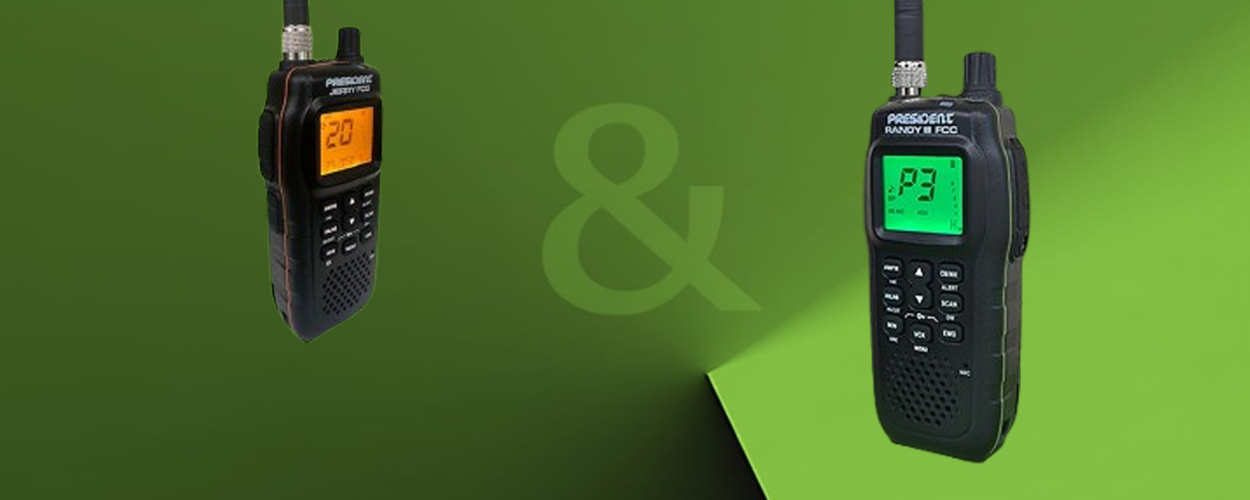
Randy III FCC : A versatile handheld AM/FM CB radio that delivers the best of both worlds; portable convenience and mobile capability. It features exclusive P-Channels, Weather Alerts, advanced noise reduction technologies, VOX hands-free operation, ASC, Channel Scan/Scan Skip, and comes complete with a desktop dock and vehicle charging module/antenna adapter.
Thomas FCC : A top seller and the first FCC-approved AM/FM CB radio. Ideal for agricultural users, this mobile CB radio offers a wide range of practical features including channel scan, advanced noise filters, ASC, 12V/24V compatibility, PA capability, USB charging, VOX hands-free operation, and a large LCD display.
The Future of Communication in Agriculture
As agriculture changes with new technology, so will the means to communicate. With the inclusion of GPS, weather forecasting instruments, and farm management programs, the features of CB radios may be significantly expanded.
Yet the main features that make President CB radios super useful, such as being dependable, affordable and easy to use, are likely to keep them very much alive in farming for a long time.
Conclusion
Effective communication is the backbone of a thriving agricultural sector. It is the key to organizing the day-to-day activities, ensuring safety, and handling logistics. In fact, efficient communication channels are the backbone of any farming business.
President CB radios serve as an indispensable, rugged solution to the unique connectivity hurdles faced by rural and isolated farmers. By providing immediate communication that bypasses the limitations of cellular networks, CB radios significantly bolster operational safety, streamline efficiency, and maximize overall yields.
This technology is far from a mere luxury or a relic of the past; it is a fundamental asset. Investing in reliable systems, like President CB radios, is a practical necessity for maintaining a modern agricultural operation that remains both environmentally sustainable and economically viable.
 Disclaimer: